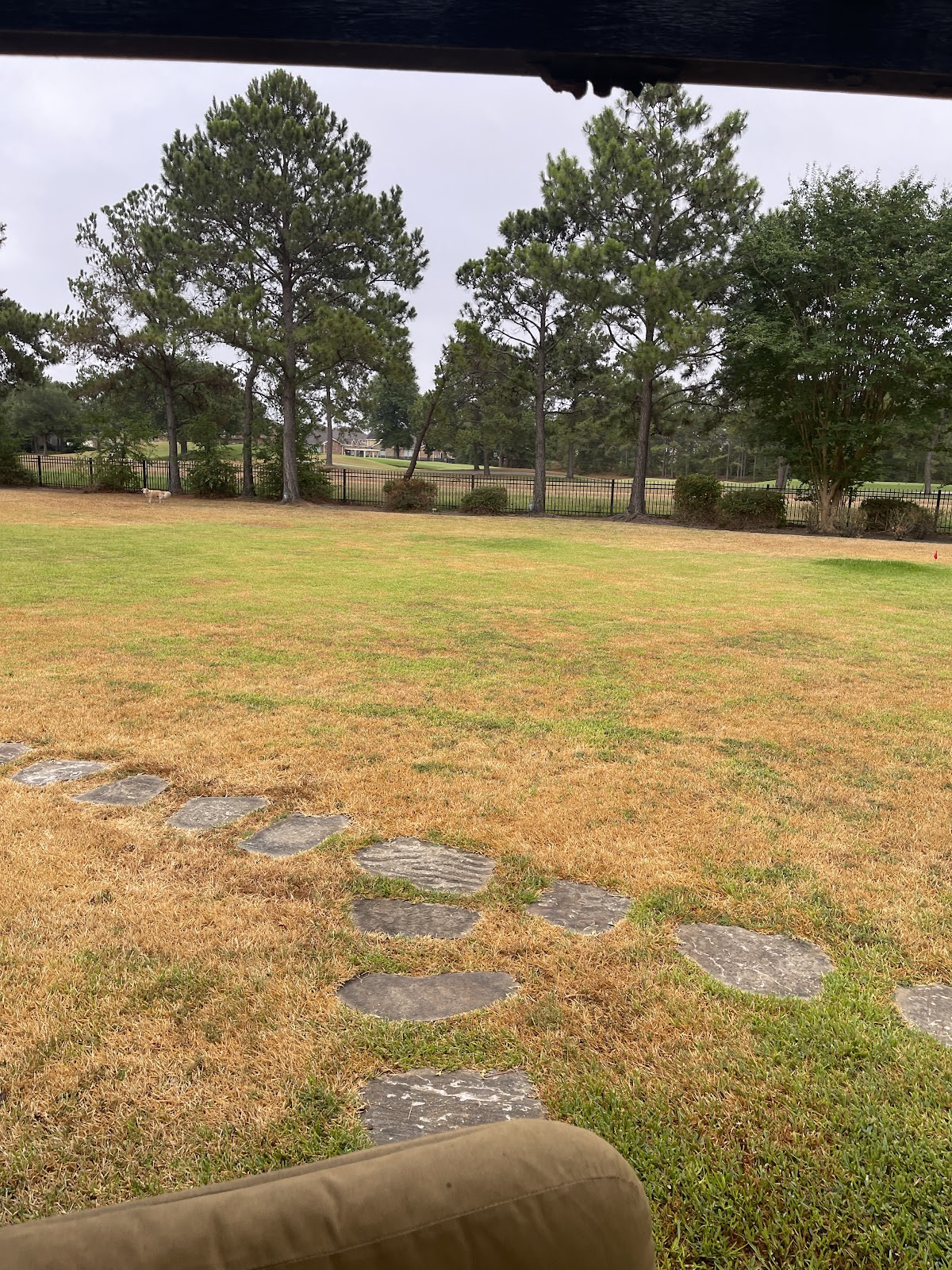
If your yard floods after every heavy rain, stays soggy for days, or has bare patches where grass won't grow, you have a water management problem. The fix isn't always obvious, though. Two of the most effective solutions are French drains and surface drains, and they work in completely different ways. Choosing between them depends on where your water is coming from, how deep the problem sits, and what your property can handle. We install both types around Spring, and I've learned that the right choice can mean the difference between a yard that dries out in hours versus one that stays waterlogged through summer.
How French Drains Actually Work
A French drain is a buried system. We dig a trench, usually 18 to 24 inches deep, and slope it slightly. Inside goes a perforated pipe surrounded by gravel and landscape fabric. Water from the soil around the pipe seeps through the perforations and travels down the line to daylight, a drywell, or a storm drain. The key is that French drains handle water that's already in the ground. If your water table is high, if groundwater is pushing up into your yard, or if subsurface water is migrating from a neighbor's property or a slope above you, a French drain will catch it before it pools on the surface.
The work is more involved. We have to excavate, lay the pipe correctly with proper slope, backfill with the right material, and make sure the outlet works. It costs more upfront. But once it's in, it's invisible and permanent. You don't think about it. In Spring, where we get heavy summer thunderstorms and the ground can stay wet for weeks, French drains are often the real solution for serious drainage problems.
When Surface Drains Make Sense
A surface drain is simpler. It's a catch basin, usually a grate or inlet, installed in low spots where water collects. The water flows into a pipe below ground and exits somewhere else on the property. Surface drains work fast for water that's already pooling on top. If you have a low spot near your house, a sunken patio, or an area where runoff from the roof or driveway collects, a surface drain catches it immediately and moves it out.
The installation is quicker and cheaper. We don't need to dig as deep or as far. The downside is that surface drains only help with water that's already sitting on top. They won't fix a water table problem or subsurface seepage. They're reactive, not preventative. They're also visible, though we can make them blend in reasonably well.
Reading Your Yard's Symptoms
The water itself tells you what's happening. If your yard stays wet and spongy even days after it rains, and the low spots are spread across a wide area, you likely have a groundwater issue. That's a French drain job. If you have one specific spot, maybe near a downspout or at the low corner of your property, where water pools and then evaporates or drains slowly, a surface drain solves it.
Dig a small test hole in the wet area. If water seeps into the hole from the sides and bottom, your soil is holding groundwater. If water only collects on the surface and the soil below is drier, you need surface drainage. In Spring, with our clay-heavy soil and seasonal flooding, many properties need both systems working together. The surface drain handles the immediate runoff, and the French drain manages the groundwater underneath.
Slope and Outlet Matter More Than You Think
Neither system works without a proper outlet. A French drain needs to go somewhere. That means either daylight at a lower elevation on your property, a dry well that can absorb the water, or a connection to the municipal storm system if your city allows it. We check local codes and site conditions first. A surface drain also needs an outlet pipe that carries water away from your house and landscaping.
Slope is critical too. The trench or the ground around the catch basin has to pitch slightly downhill toward the outlet. Even a quarter inch per ten feet matters. We use laser levels to get it right. A French drain that doesn't slope won't flow. A surface drain that doesn't slope will overflow. Both are useless if the outlet is too high or blocked.
Cost and Long-Term Value
A surface drain might run 800 to 1500 dollars, depending on how far the outlet pipe has to go. A French drain for a typical residential problem costs between 2000 and 5000 dollars, sometimes more if we're working across a large area or hitting rock. The price difference is real, but the question is what solves your problem permanently.
If a surface drain fixes your issue, it's money well spent. If you install a surface drain and the yard is still soggy because of groundwater, you've spent money on a partial fix. You'll end up installing the French drain anyway. It's worth getting a professional assessment before you decide. We look at the site, ask about when the problem happens and how long it lasts, and recommend what actually works.
Getting It Right the First Time
Smarter Sprinklers & Drain Systems has been handling these decisions for Spring homeowners for years. We'll come out, look at your yard, and tell you straight whether you need a French drain, a surface drain, or both. Call us at your earliest convenience to schedule a site visit.